Importing Thai Jasmine Rice in Bulk: Quality Grades, Packaging and Shipping Guide
Why "100%" does not mean 100% broken, what a Hom Mali certification mark actually certifies, and why a rice container fills on weight long before it fills on space. Written for importers specifying their first bulk order.
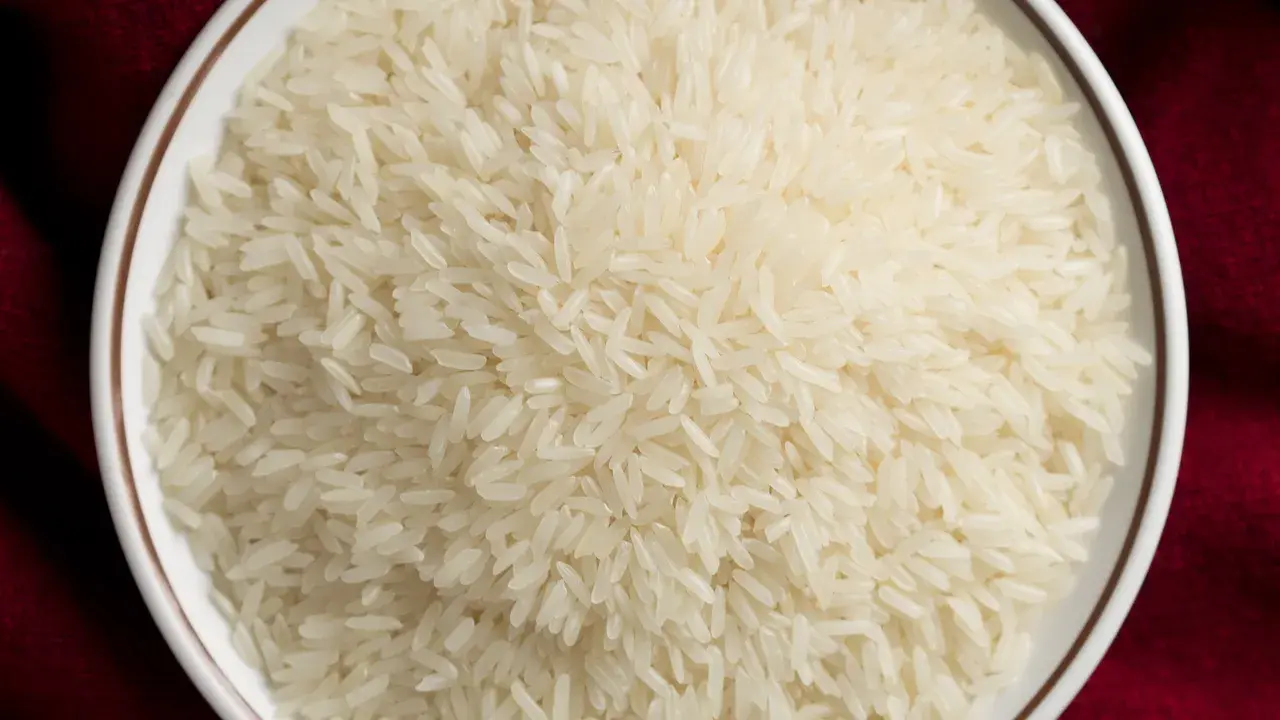
Almost everything that decides whether you are happy with a container of Thai jasmine rice is settled before it loads: the variety, the crop year, the broken percentage, the moisture and the bag. None of those is visible in a price, which is why two offers both described as “Thai jasmine rice, 25 kg bags” can be materially different goods.
Thailand’s place in the rice trade
Thailand has been one of the world’s largest rice exporters for decades, and fragrant rice is what it is best known for. One consequence of that long-established trade matters to a new buyer: the Thai Rice Exporters Association publishes indicative FOB prices for the standard export grades every week.
You cannot buy at those numbers — they are benchmarks, not offers — but they let you check whether a quotation is plausible before you negotiate. An offer far below the benchmark for its stated grade is telling you something about the grade, the crop year or the seller.
What Thai Hom Mali rice actually is
“Jasmine rice” is a market name. The controlled term is Thai Hom Mali Rice, and it is narrower than most importers assume.
Hom Mali is fragrant, non-glutinous long-grain rice from two varieties: Khao Dawk Mali 105 (KDML105) and RD15, itself developed from KDML105. Its floral aroma, soft texture and slightly clinging grain come from those varieties grown in Thai conditions. Ordinary Thai long grain cooks firmer and more separate — a perfectly good product, and not the same thing.
Thailand protects the designation actively. The Department of Foreign Trade operates a Thai Hom Mali Rice certification mark, registered with the Department of Intellectual Property and licensed to approved millers, packers and exporters, and it publishes the list of licensed companies. Enforcement is backed by DNA testing of varietal purity, which gives varietal claims on Thai rice more weight than on some competing origins.
In the European Union, Commission Implementing Regulation (EU) No 120/2013 registered Khao Hom Mali Thung Kula Rong-Hai as a Protected Geographical Indication — the first South-East Asian GI protected in the EU. One detail matters commercially: the protection attaches to that full name, tied to its growing area, not to the words “Hom Mali” standing alone. Registrations can be checked in the EU’s geographical indications register.
Why “jasmine” on an offer is not a specification
Because the market name is loose and the controlled term is not, “jasmine rice” on a proforma invoice commits a seller to very little — and blending fragrant rice with ordinary long grain is the classic way an offer gets cheap without looking cheap.
Ask for four things instead of the word: the variety, the minimum varietal purity, the crop year, and whether the cargo is eligible to carry the certification mark.
Grades and what a broken-rice percentage means
Thai export rice trades on a published grade ladder. The grades you will meet most often are Thai Hom Mali Rice 100%, White Rice 100% Grade B, White Rice 5%, 10%, 15% and 25%, parboiled grades, and White Broken Rice A.1 Super.
The percentage refers to the proportion of broken kernels permitted in the lot. Lower means more whole grains, better appearance and a higher price.
This produces the commonest misreading in the trade: “100%” does not mean 100% broken. It is the premium whole-grain grade — the top of the ladder, not the bottom.
Broken rice is a legitimate product in its own right, not a by-product: A.1 Super is sold deliberately into brewing, snack and noodle manufacturing, pet food and markets that prefer a broken grain, with its own price and its own customs heading.
The numeric limits behind each grade sit in the Thai Ministry of Commerce rice standard, which has been revised over the years. Name the standard and its edition in the contract, and write the agreed maximum broken percentage in as a number: a grade letter with nothing behind it is a label, not a specification. It is also the figure most likely to drift between agreement and arrival, so specify the tolerance and who inspects.
Evaluating a specification
Five things decide whether a cargo arrives in the condition you paid for.
Moisture is the big one. Rice loaded wet mildews, cakes and heats inside a steel box crossing the tropics, and no paperwork recovers it afterwards. The international reference is the Codex Alimentarius Standard for Rice, CXS 198-1995, available through the Codex texts database. It sets a maximum moisture level and notes that lower limits may be required depending on climate and transport duration — so treat the ceiling as an outer bound, not a target.
Varietal purity is the share of the lot that is genuinely the declared variety. This is what separates real Hom Mali from a blend, and in Thailand it can be tested.
Grain dimensions — whole-kernel length and the proportion of whole grains — carry the visual quality your customer sees.
Crop year. Fragrant rice loses aroma in storage. Old crop is legitimate, widely traded and cheaper; the problem is old crop sold quietly at new-crop prices.
Cleanliness: foreign matter, paddy grains, chalky, damaged and discoloured kernels, and freedom from live insects.
The figures most often quoted against the Thai Hom Mali standard are 92% minimum varietal purity, 14% maximum moisture and 7.0 mm minimum whole-kernel length. Exporters repeat them widely, but the standard exists in more than one edition, so verify the current figures against the standard itself rather than a listing — and ask for a certificate of analysis for your batch. On a first shipment, independent pre-shipment inspection is cheap against the value of a container.
Packaging for wholesale
Bag sizes of 5 kg, 10 kg, 25 kg and 50 kg cover most wholesale business, subject to availability and to the mill’s capability for your grade. Our long grain rice listing publishes the sizes we pack to, from 1 kg to 50 kg according to requirement.
Four decisions sit inside the bag:
- Material. PP woven is the workhorse for food service and repacking; BOPP is printed and laminated for retail shelves; jute is traditional and breathable, and some markets still prefer it.
- Inner liner. A PE liner is the main defence against moisture pickup in transit and in a humid warehouse. Specify it rather than assuming it.
- Printing and private label. Common at these sizes, and bag printing frequently sets the schedule rather than the rice — confirm artwork, destination labelling rules and lead time together.
- Palletised or floor-loaded. Floor-loading maximises payload; palletising speeds discharge. It changes both quantity and price, so decide before asking for a quotation.
Bulk purchasing and container loading
Rice is dense. A container of bagged rice reaches its payload limit before it fills the cube, so order quantity is a weight calculation, and a 20FT is frequently the right box even though a 40FT holds twice the volume.
Do not accept a bag count without its assumptions. Ask for the bag net and gross weight, bags per container, the resulting total, and whether that figure is floor-loaded or palletised. Check it against the container payload limit and against road weight limits at destination — a load that is legal leaving the port of loading can be over the limit at the other end.
Two risks are specific to rice. Condensation: moisture in the cargo plus temperature swings across a long voyage produces “container rain”, which lands on the top layers as mould. The defences are correct moisture at loading, kraft paper lining, desiccants and ventilation — ask what the exporter does as standard. Fumigation: frequently required, by the destination or the carrier. Confirm whether it is performed and what certificate is issued.
Export documents and import requirements
Rice is both a plant product and a food, so it carries more paperwork than general cargo. A normal set is the commercial invoice, packing list, bill of lading and certificate of origin — including the preferential origin certificate for your trade agreement, where one applies — plus a phytosanitary certificate, a certificate of analysis, and a fumigation certificate where required. Halal certification is routine for some markets, and certified Hom Mali adds its certification mark documentation.
Classification drives duty. HS heading 1006 covers rice, subdivided by how far it has been processed: paddy, husked (brown), semi-milled or wholly milled, and broken. Milled jasmine rice falls under 1006.30; broken rice sits separately under 1006.40, often at a different duty. The nomenclature is maintained by the World Customs Organization, but national tariff lines extend past the six-digit heading, so confirm the full code with your broker.
One check before contracting: rice is among the most commonly restricted agricultural imports in the world, and import licensing, tariff quotas and registered-importer requirements are widespread. A certificate that must be issued at origin cannot be obtained once the vessel has sailed.
FOB, CFR and CIF
Three Incoterms rules cover most rice business:
- FOB — the seller delivers on board at the named Thai port of loading. Ocean freight and insurance are yours from there.
- CFR — the seller also pays ocean freight to the destination port. Insurance is still yours.
- CIF — as CFR, plus marine insurance at the minimum cover the rule requires.
In all three, risk passes when the goods are on board, which regularly surprises buyers who read CIF as the seller carrying risk to destination. It does not; it means the seller buys the insurance.
For rice that distinction has teeth: the characteristic claim — moisture damage found on discharge — arises during a voyage where the risk is already yours. The minimum cover a CIF seller must buy is basic, so if you want wider protection against damp and mould, specify it or arrange it yourself.
None of the three includes destination costs: terminal handling, clearance, duty, VAT and inland haulage are the buyer’s. Comparing an FOB offer against a CIF offer without adding those back is the commonest way a quotation is misread. Name the Incoterms edition in the contract.
Mistakes worth avoiding
- Treating “jasmine” as a specification instead of naming variety, purity and crop year.
- Misreading the grade ladder — assuming “100%” describes broken content.
- Accepting moisture at the ceiling for a long tropical voyage.
- Budgeting the container on volume when the binding constraint is weight.
- Skipping independent inspection on a first shipment, or checking import licensing only after contracting.
Frequently asked questions
Is jasmine rice the same as Thai Hom Mali rice? Not necessarily. “Jasmine” is a market name; Thai Hom Mali is a controlled designation covering the KDML105 and RD15 varieties, with a certification mark administered by Thailand’s Department of Foreign Trade.
Does “100%” mean the rice is 100% broken? No — it is the premium whole-grain grade. Percentages such as 5% or 25% describe the maximum proportion of broken kernels allowed.
How much rice fits in a container? It is a weight calculation, not a volume one, and it changes with bag size and palletisation. Ask for a loading plan rather than accepting a bare bag count.
Do I need a phytosanitary certificate? Almost always. Rice is a plant product and most destinations require one issued at origin.
Request a wholesale quotation
If you are costing a first container, settle two things before anything else: the grade, with its broken percentage written as a number, and whether your target quantity is a weight or a volume.
For a quotation, send the grade and broken percentage, the crop year, the bag size and material, whether bags are printed or plain, palletised or floor-loaded, the quantity, the destination port and your preferred Incoterm — through the quotation form or on WhatsApp. We will come back with a specification, a loading plan and a price.
You can see the rice we already publish on our long grain rice page, alongside the wider product catalogue.
Grades, specifications, packing and quantities are confirmed per order against the cargo offered; nothing above is an offer or a guarantee of availability. Import requirements differ by destination and change — confirm them with your customs broker for your market.