Buying Copper Scrap in Bulk: Grades, Inspection and Packing Checklist
Millberry and bare bright are the same grade, "99.9%" is a trade convention rather than a published minimum, and a photograph cannot prove either. A practical guide for buyers pricing their first copper container.
Copper scrap is priced off an exchange, so buyers often assume the only variable is the discount. It is not. The grade, the contamination and the weight basis move the landed cost far more than a few dollars on the headline, and all three are settled before the container is sealed.
Millberry, bare bright, No. 1 and No. 2
The first thing worth clearing up: Millberry and bare bright are not two different grades. They are trade names for the same material — the top grade of copper wire scrap, listed in the ReMA/ISRI Scrap Specifications Circular under the code Barley: No. 1 bare, uncoated, unalloyed copper wire. If an offer lists Millberry and bare bright as separate line items at different prices, ask what the seller thinks the difference is.
The grades you will actually meet:
| Trade name | Code | What it is |
|---|---|---|
| Millberry / bare bright | Barley | No. 1 bare, uncoated, unalloyed copper wire |
| No. 1 copper wire | Berry | Clean, untinned, uncoated wire and cable — not necessarily bright |
| No. 1 heavy copper | Candy | Clean unalloyed clippings, bus bars, commutator segments, clean tube |
| No. 2 copper | Birch / Cliff | Miscellaneous unalloyed wire, solids and tube |
| Copper nodules | Clove / Cobra | Chopped wire granules, No. 1 and No. 2 respectively |
| Insulated cable | Druid / Droid | Wire still in its insulation, sold on recovery |
Two figures matter. No. 2 copper (Birch/Cliff) carries a published assay: nominal 96% copper, minimum 94%, by electrolytic assay. Nodules do too — Clove at minimum 99% copper, Cobra at minimum 97%.
Barley does not. The circular sets no numeric copper minimum for bare bright. The “99.9%” you see in almost every copper wire offer online is a trade convention, not a published specification — so it is something to agree in the contract and verify by assay, never something to assume because it appeared in a listing.
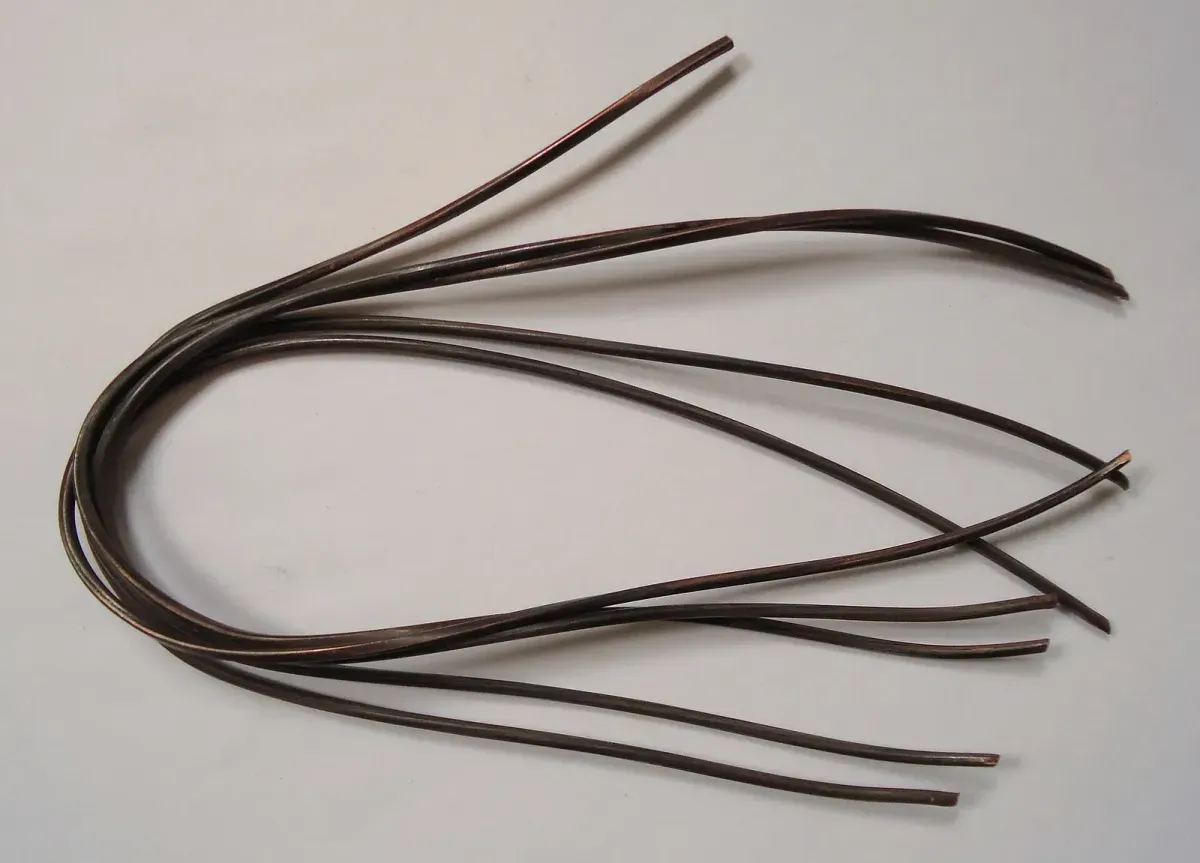
Bare, uncoated copper wire — but dull rather than bright. Material like this is clean enough for Berry yet would be rejected as Barley on appearance alone, which is why the grade name and the assay basis both belong in the contract. Photograph: Mauro Cateb, CC BY-SA 3.0, via Wikimedia Commons. Illustrative — not a photograph of our own stock.
One more distinction worth guarding: copper cathode is not scrap. It is refined copper, normally traded against an exchange or ASTM standard with a certificate of analysis, and it sits under a different customs heading. Cathode offers are also a well-known target for document fraud, so treat an unsolicited one with more care than a scrap offer, not less.
What a photograph can and cannot tell you
Photographs are worth asking for, and they genuinely settle some questions. A clear, recent, well-lit set will show you the form of the material (wire, solids, tube, chopped nodules), roughly how clean it looks, whether insulation is present, obvious mixed metals such as brass fittings or steel, and how the lot is packed.
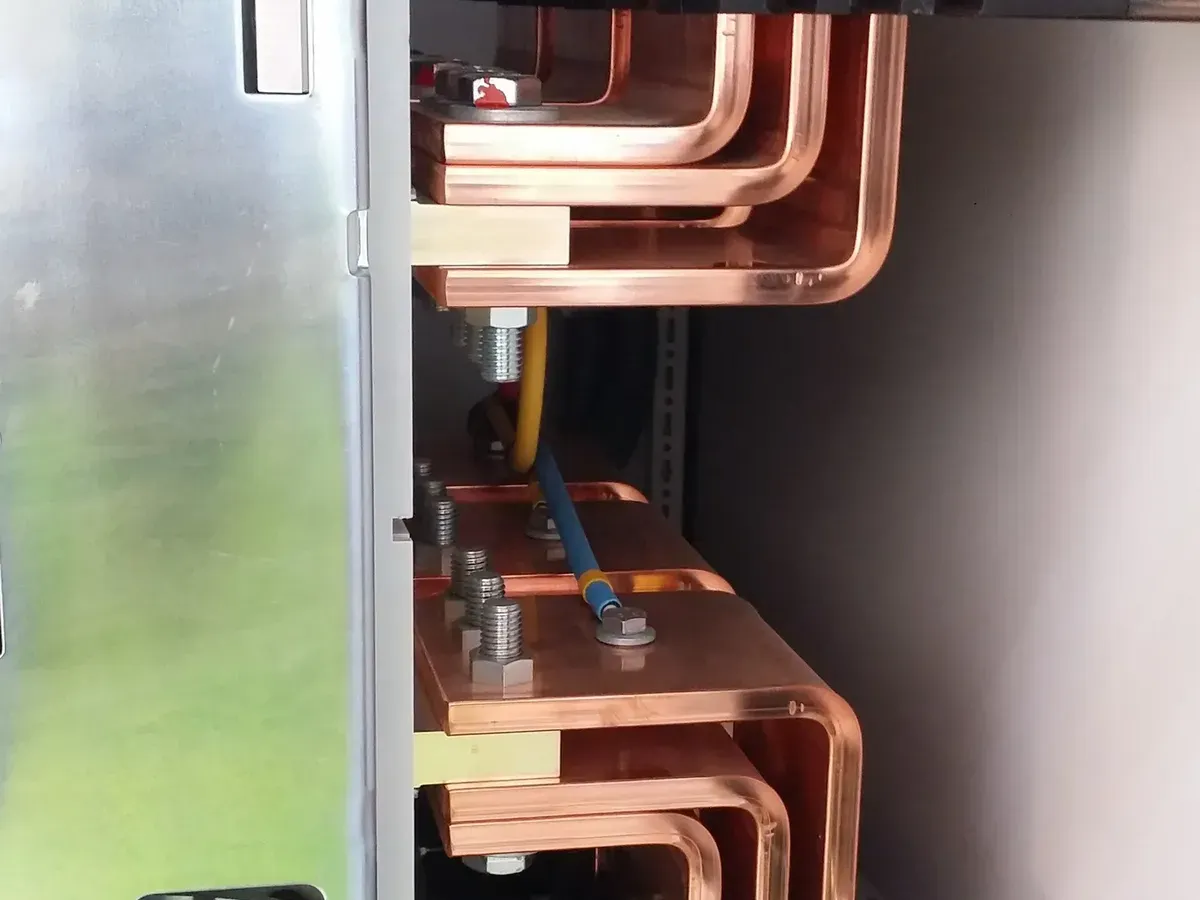
Copper busbar in service. Once a panel is decommissioned, clean unalloyed busbar of this kind is classic No. 1 heavy copper (Candy) — but a photograph still cannot show whether plating, solder or alloy content is present. Photograph: ToT89, CC BY-SA 4.0, via Wikimedia Commons. Illustrative — not a photograph of our own stock.
What a photograph cannot establish, at all: copper content, alloy content, plating or tinning, moisture, and the true weight. Tinned copper can look like clean copper in a picture. A thin layer of bright wire over a lower grade photographs beautifully. And a photo of a tidy sample says nothing about the other nineteen tonnes.
So treat photographs as a screening tool, and settle quality by assay, by independent pre-shipment inspection, or by both. Because images circulate freely in this trade, it is also worth asking for photographs taken to order — the lot with today’s date visible — rather than accepting a set that may belong to someone else’s material.
Contamination: insulation, moisture and mixed metals
Most copper disputes come down to four things.
Insulation. Bare grades must be free of it. If the material is insulated, it is a different product sold on a different basis — Druid or Droid, priced on expected copper recovery rather than gross weight. Agree the recovery percentage and how it will be verified.
Coatings and alloys. Tin, solder, plating, brass and bronze all disqualify material from No. 1 grades. Burnt brittle wire is excluded too, and burning insulation off cable is both a quality problem and, in most jurisdictions, an environmental offence.
Moisture and oil. Copper is bought by weight, so water is the cheapest adulterant there is. Specify dry material, free of excessive oil, and remember that a lot loaded in the rain weighs more at origin than at destination.
Mixed materials. Iron, aluminium, insulation fragments and general non-metallics are deducted, and the deduction basis should be in the contract before loading — not negotiated after a weighbridge dispute.
Weights, packing and container loading
Get the weight basis explicit, because three different numbers circulate:
- Net weight — the copper itself.
- Gross weight — copper plus bags, drums, pallets, strapping and dunnage.
- Tare — the packing, the difference between the two.
Copper is dense, so a container reaches its payload limit long before it fills the space. Our scrap catalogue publishes an estimated loading of 22 tonnes per 20FT and 28 tonnes per 40FT, subject to the material’s packing density, the actual container payload and the transport weight limits that apply on your route. Those are planning figures, not a guarantee: chopped nodules in bulk bags and loose light wire load very differently.
Settle the packing format too — loose, bulk bags, drums, bales or palletised and strapped — along with who supplies the pallets, whether the container is floor-loaded, and which weight is the contractual one. Ask for a weighbridge ticket and the container and seal numbers, and remember the VGM declaration is required under SOLAS for every packed container.
What to include when you ask for a quotation
A quotation request that gets a usable answer first time states:
- Grade by name and code — Barley, Berry, Candy, Birch/Cliff, Clove/Cobra, Druid/Droid.
- Copper content you require, and the assay method that will decide it.
- Quantity, in tonnes, and whether it is a single container or a running programme.
- Packing preference — loose, bulk bags, drums, bales or palletised.
- Destination port, and any import licensing or inspection your country applies.
- Incoterm — FOB, CFR or CIF — and the edition.
- Inspection, if you want it, and who appoints the inspector.
Pre-shipment checklist
- Grade and code written into the contract, not just a trade name
- Copper content and assay method agreed, with tolerance and the deduction basis for contamination
- Recovery percentage agreed for anything insulated
- Photographs taken to order, dated, showing the actual lot
- Independent pre-shipment inspection arranged, where the value justifies it
- Material confirmed dry and free of excessive oil
- Net, gross and tare weights defined, and the contractual one identified
- Weighbridge ticket, container number and seal number recorded
- Packing format and pallet responsibility settled
- Customs heading confirmed — copper waste and scrap falls under HS 7404.00, refined cathode does not
- Transboundary rules checked: metallic non-dispersible copper scrap is listed at B1010 in Annex IX of the Basel Convention, while copper in dispersible form sits separately at B1070
- Destination import licensing and inspection requirements confirmed before loading
Request a quotation
You can see the grades we list, with their codes and indicative specifications, in our copper scrap catalogue — from Millberry bare bright wire through No. 2 Birch/Cliff and insulated cable — alongside the wider scrap materials catalogue.
Send the grade, the quantity in tonnes, your packing preference and the destination port through the quotation form or on WhatsApp, and we will come back with a specification, a loading plan and a price.
Grades and specifications above are summarised from the ReMA/ISRI Scrap Specifications Circular for guidance; the applicable specification, copper content, quantities and packing are confirmed per order against the lot offered. Nothing here is an offer, a guarantee of availability or a guaranteed assay. Import and transboundary-movement requirements differ by destination and change — confirm them with your customs broker.